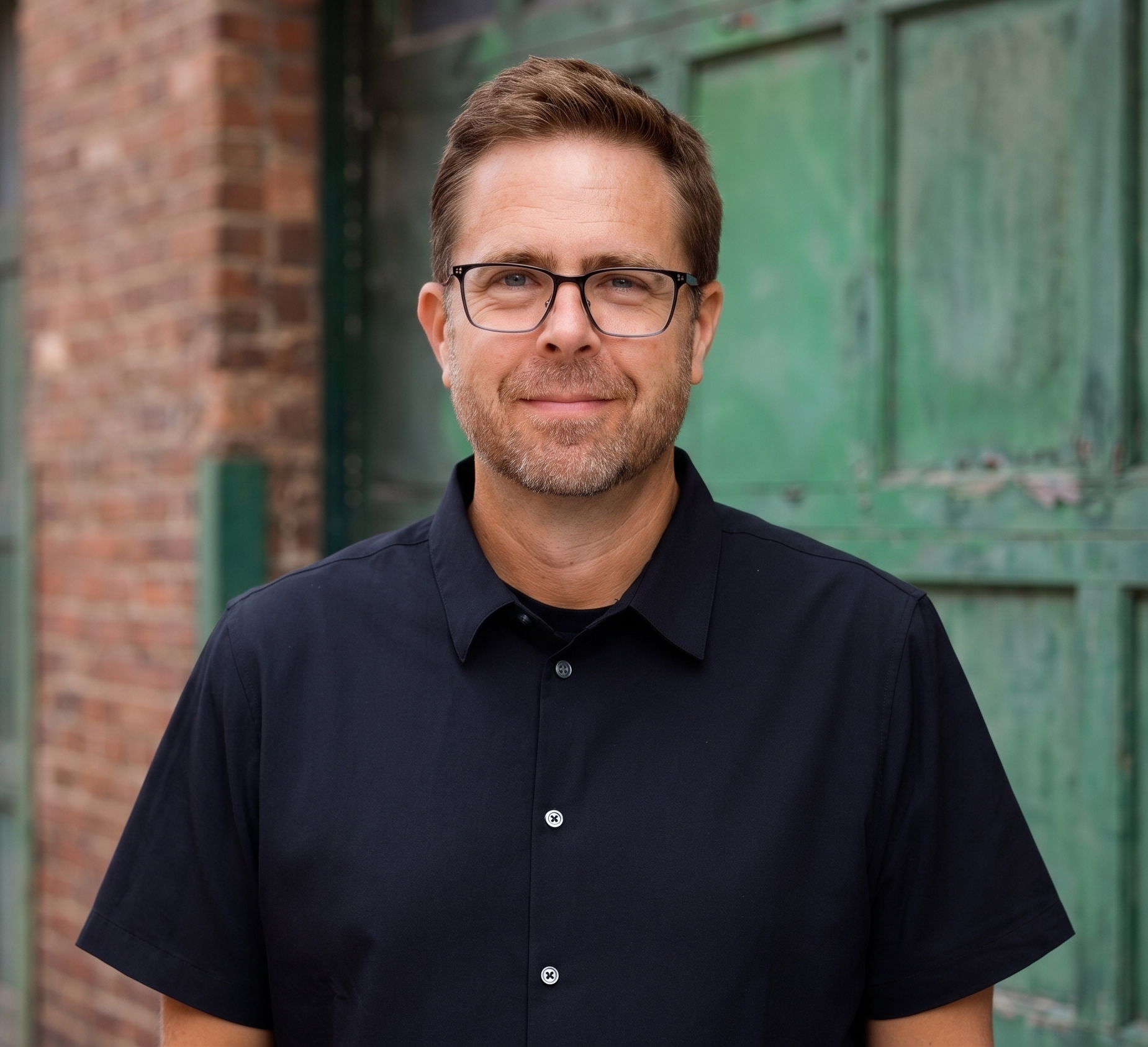
From a TI-99/4A to the digital counter
Self-taught, early, and hooked
I taught myself to program on a TI-99/4A when I was nine, which tells you most of what you need to know. The rest you can get from the fact that at nineteen I talked my way into the GIS computer lab at Duke and never really left. Maps, Sun workstations, and digitizing tablets: I was hooked.
The cattle ranch lesson
One formative lesson came from a cattle ranch. My grandfather owned one in the foothills of the Sierra Nevadas, and I spent summers there being useful in the loosest sense of the word. It's a golf course now because the market decided an acre was worth more under golf carts than under hamburgers.
What the land is, what it could be, is all about who can prove it.
Gut instinct vs. coordinates
The academic version is nerdier. At the College of Wooster I wrote an honors thesis on how conservation groups were trading gut instinct for coordinates (an early sign I would never have a normal job). I was also the GM of the college radio station, excellent training for talking endlessly about things nobody asked about.
Ground truth (with explosives)
An internship one summer with The Conservation Fund led to a job with the U.S. Forest Service, mapping 20,000 acres of a decommissioned Army TNT plant outside Chicago as it was turned back into tallgrass prairie. If you want strong feelings about ground truth, start your career somewhere where things explode. Then GeoDecisions in Newport News as a GIS consultant and the growing suspicion that I could do this on my own.
"Google Maps on steroids"
In 2000, I found out. I founded WorldView Solutions and spent eighteen years building geospatial software for government, non-profits and private companies. At parties I described it as "Google Maps on steroids," which was both a lie and the most accurate thing I could say in one sentence. Along the way I co-founded Outdoor Access, an Airbnb-style marketplace for outdoor recreation, because apparently one company wasn't enough. Gannett Fleming acquired WorldView in 2018, and I stayed on as Innovation Director to learn what a company looks like when it has an HR department. In 2022 I finally went back for a Master's in Environmental Management at Duke, three decades after the lab that started it.
An idea that fits on a Post-it
In 2023, I started Civic Vanguard, and the idea behind it is simple enough to fit on a Post-it: build the digital counter.
Every locality has a counter. Somebody walks in with a question (what's my tax bill? what's the zoning? is this parcel in the floodplain?) and a person behind that counter helps them. It works because a human is standing there who knows things. It fails because that human has a lunch break, a queue, and forty other jobs.